How a figurine is born: from 3D printing to hand-painting
The question we hear most often: why does a figurine cost as much as a good set of peripherals? The answer is in the amount of handwork. Here's the process, step by step.
Step 1. The model
It all starts with a 3D model of the character. This is the longest stage: the pose has to read well from every angle, the weapon can't look flat, and the figurine itself needs to stand firmly without tipping over at the slightest touch.
We also work out how to split the model into parts for printing. A sword, wings, or an outstretched arm get printed separately — otherwise they'd carry support marks in the most visible spot.
Step 2. Printing
We print in resin: it delivers detail ordinary plastic can't match. On thin elements you can make out the texture of fabric, the links of chainmail, the engraving on armor. One figurine takes several hours to print, then gets washed and cured under UV light.
Step 3. Sanding — the most tedious and the most important
Printing leaves support marks behind. They're cut off and sanded by hand, working through progressively finer grits. Rush this step and the paint goes on blotchy, making the flaw even more visible — which is why more time goes into this stage than any other.
Step 4. Priming
Primer exposes every scratch you missed — often sending us back to sanding. It also gives the paint something to grip: without primer, the paint job would rub off at the touch of a finger.
Step 5. Hand-painting
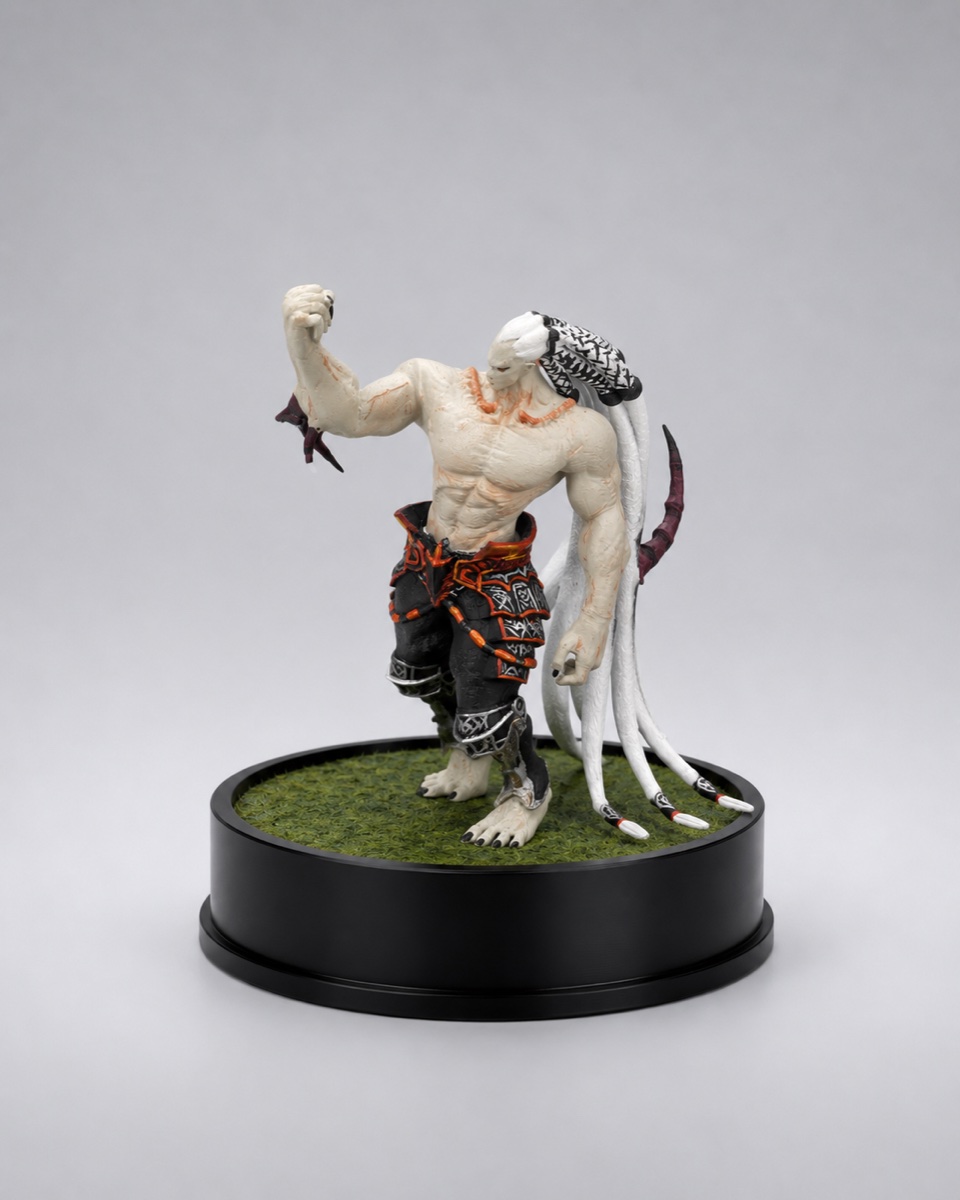
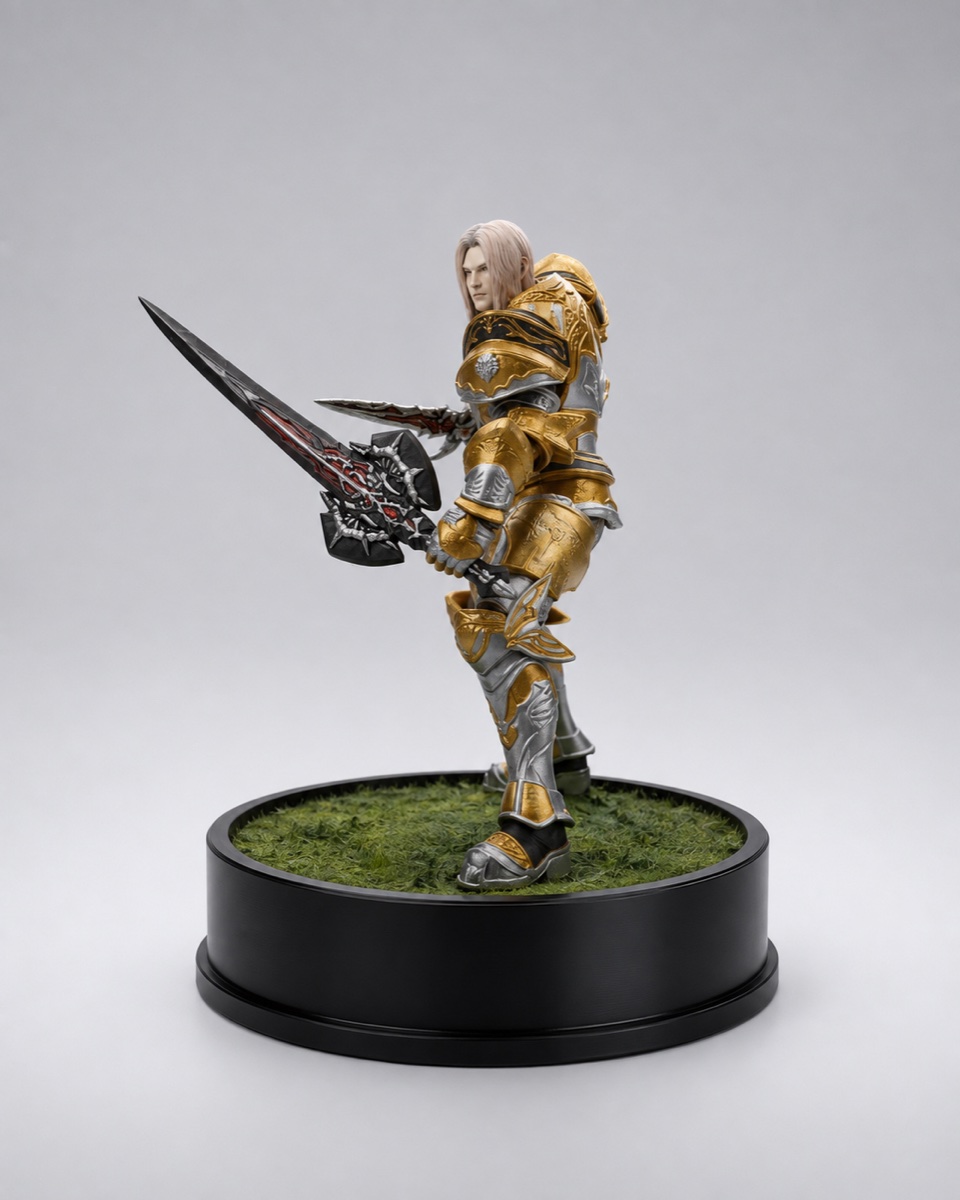
Base color first, then shading in the recesses, then highlights on the raised areas — that's what stops a figurine from looking flat. The finest work goes into the eyes, metal, and blade gradients, done with a brush just a few hairs wide.
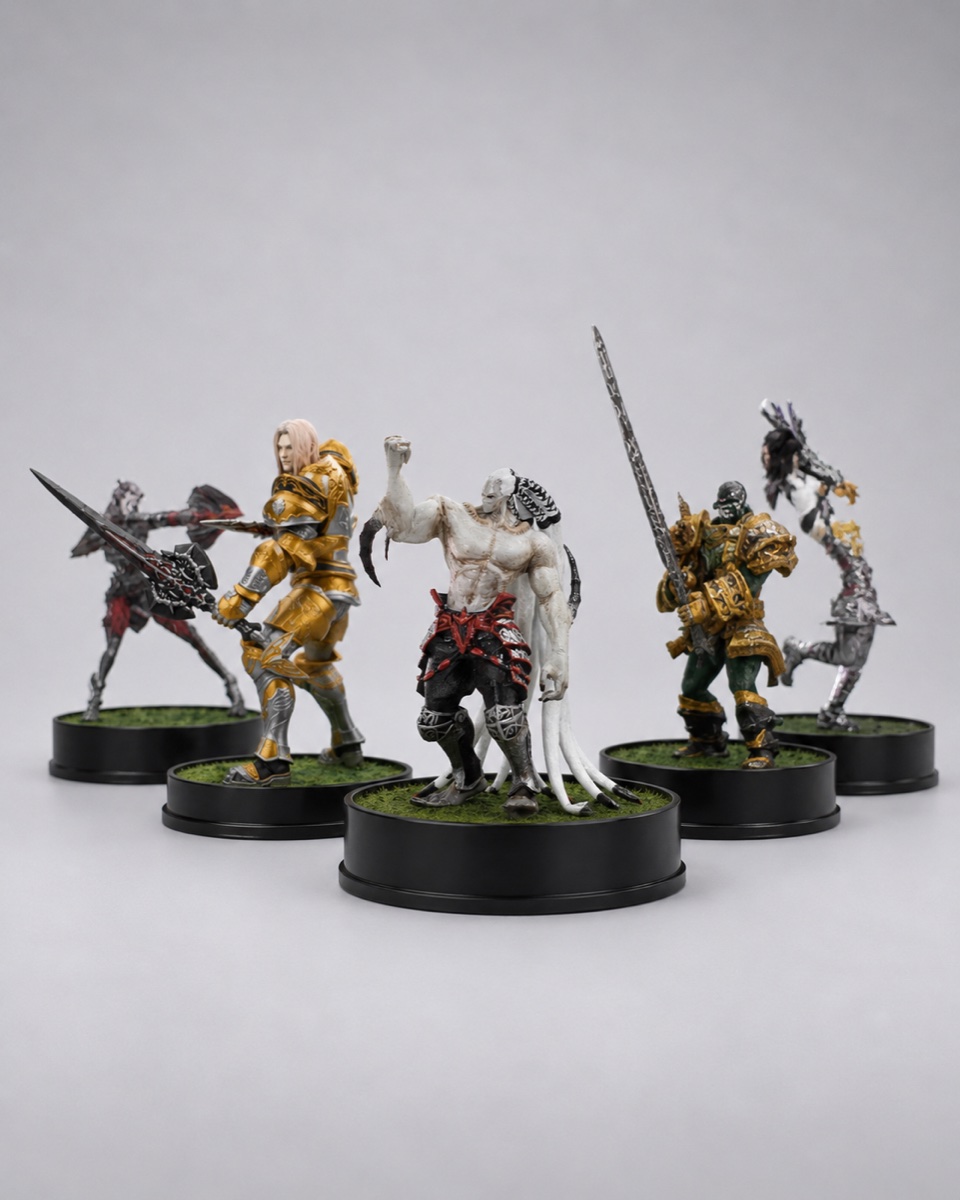
It's this hand-painting that means no two figurines are ever identical. A few percent difference in shade or sheen isn't a flaw — it's proof a person made it, not a machine.
Step 6. Base and assembly
The figurine is mounted on a round base finished with decorative turf or an obsidian texture, depending on the character. The club's name runs along the edge of the base. Once assembled, everything gets a protective coat of varnish — matte for skin and fabric, gloss for metal.
How long it takes
From model to finished figurine is several days of pure work, and that's without counting drying time between layers. That's why figurines don't sit in a warehouse in batches — each one is made to order, and we're upfront about the timeline before you pay.